New Septic Tank Install: What Homeowners Need to Know
Quick answer: A new septic tank installation involves a site assessment, system design, excavation, tank and drain field installation, and a final inspection. The process typically takes one to several days depending on property conditions. Choosing a licensed local contractor, like J. Henry Plumbing in Huntsville, AL, ensures your system meets North Alabama's soil conditions and regulatory requirements.
Your home's plumbing gets a lot of attention. The faucets, the water heater, the pipes behind the walls. But beneath the yard, quietly doing one of the most important jobs on the property, sits the septic system. When it fails, there's no ignoring it.
A failing or outdated septic tank can cause sewage backups inside your home, create health hazards in your yard, and lead to costly property damage if left unaddressed. For homeowners in Huntsville and across North Alabama, understanding when to replace a septic system, and how the installation process works, can save you significant stress and money.
J. Henry Plumbing has been serving homeowners throughout North Alabama with licensed septic system installations, holding Alabama Onsite Waste Water License #2894. This guide walks you through everything you need to know about a new septic tank install, from the early warning signs to long-term maintenance.
What Is a Septic System and How Does It Work?
A septic system is an underground wastewater treatment structure used in homes that are not connected to a municipal sewer line. When wastewater leaves your home through the drains and toilets, it flows into the septic tank, where solids settle to the bottom and form sludge, while lighter materials float to the top as scum. The liquid in between, called effluent, moves out of the tank and into a drain field, where it is slowly absorbed and naturally filtered by the soil.
The system is largely self-contained, but it requires regular maintenance to function properly. Neglect it long enough, and problems become unavoidable.
What Are the Signs You Need a New Septic Tank?
Not every septic issue calls for a full replacement, but certain warning signs suggest that repairs alone won't cut it. Watch for these red flags:
- Slow drains or sewage backups: If multiple drains in your home are slow or sewage is backing up into sinks or tubs, the tank or drain field may be failing.
- Foul odors: Persistent sewage smells near your yard or inside your home often point to a system that can no longer contain or process waste effectively.
- Lush, green patches in the yard: Unusually green or spongy grass over the drain field is a sign that untreated effluent is surfacing, which is both a system failure and a health hazard.
- Gurgling sounds: Strange gurgling noises coming from toilets or drains indicate a blockage or pressure issue in the system.
If your tank is approaching or past its expected lifespan, these signs take on added urgency. Concrete septic tanks typically last 20 to 40 years, while newer polyethylene or fiberglass tanks can last longer with proper care. If your system is aging and showing symptoms, a full replacement is often the more cost-effective long-term decision.
How Does the New Septic Tank Installation Process Work?
What happens during the initial consultation and site assessment?
J. Henry Plumbing begins every septic installation with a thorough on-site evaluation. This includes assessing the soil composition, measuring the lot size, and identifying the best location for both the tank and the drain field. Soil permeability is especially important in North Alabama, where clay-heavy soils can limit drainage and influence which type of system is appropriate.
During this phase, J. Henry Plumbing also handles the permitting process. In Alabama, septic system installations must comply with state regulations and local health department requirements. Working with a licensed contractor ensures that every permit is filed correctly and that your system meets all applicable codes before a single shovel hits the ground.
How is the septic system designed for my property?
No two properties are the same. The design phase accounts for your household size, daily water usage, lot layout, and soil test results. These factors determine the size of the tank needed and the configuration of the drain field.
The core components of a conventional septic system include:
- The septic tank: A watertight container (typically 1,000 to 1,500 gallons for a standard residential home) that holds incoming wastewater and separates solids from liquids.
- The drain field: A network of perforated pipes buried in gravel-filled trenches that distribute effluent into the soil for natural filtration.
- The distribution box: Connects the tank outlet to the drain field and ensures even flow distribution.
What does the excavation and installation involve?
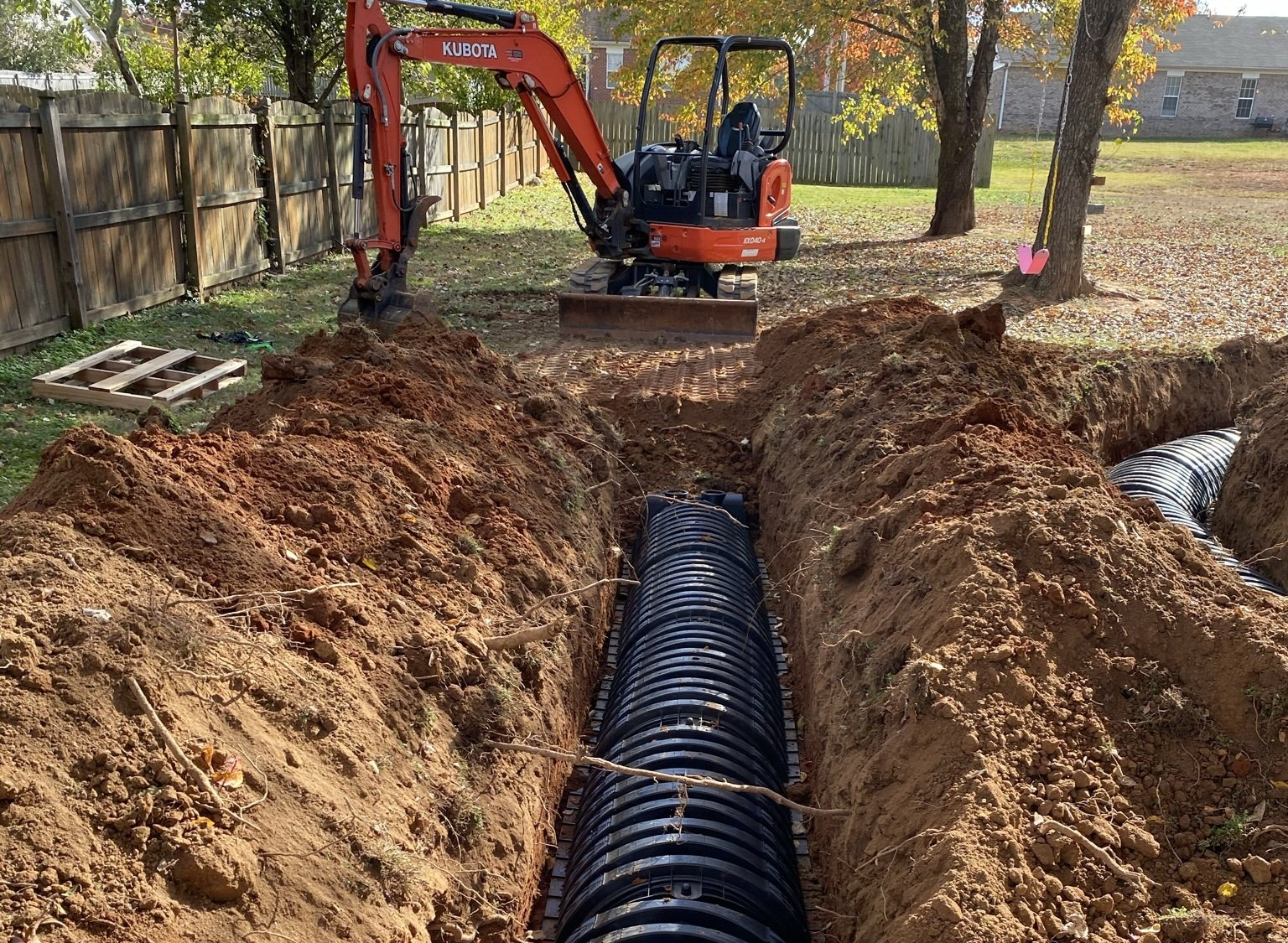
Once the design is finalized and permits are secured, the installation begins with site preparation. J. Henry Plumbing uses backhoe equipment to excavate the area for both the tank and the drain field trenches. The tank is carefully set in place, all inlet and outlet connections are fitted and sealed, and the drain field piping is laid to exact specifications.
Every step of the installation follows North Alabama regulatory standards and industry best practices. Shortcuts here can result in premature system failure, environmental violations, and expensive remediation.
What happens during the final inspection and yard restoration?
After installation, J. Henry Plumbing conducts a final inspection to verify that the system functions correctly and meets all compliance requirements. Your local health department may also require an official inspection before the system can be placed into service.
Once everything is approved, the excavated areas are backfilled and the yard is restored as closely as possible to its pre-installation condition. Your new system is ready to use.
What Type of Septic System Is Right for My Home?
Conventional Septic Systems
Conventional systems are the most common choice for properties with adequate soil permeability and sufficient space for a drain field. They are reliable, relatively straightforward to install, and cost-effective for most residential properties.
Advanced Treatment Septic Systems
Advanced treatment systems, sometimes called alternative or aerobic treatment units, are designed for properties where conventional systems are not feasible. This might include lots with poor soil drainage, high water tables, or proximity to sensitive environmental areas. These systems add an additional treatment step before effluent reaches the drain field, producing cleaner output and reducing environmental impact.
Choosing between the two comes down to three primary factors: soil type, household size, and local regulatory requirements. J. Henry Plumbing evaluates all three during the initial site assessment and recommends the system best suited to your specific property.
Why Choose J. Henry Plumbing for Septic Tank Installation in North Alabama?
Local expertise in Huntsville and surrounding communities
J. Henry Plumbing serves Huntsville, Madison, Athens, Decatur, Harvest, Meridianville, Hazel Green, and the broader North Alabama region. That local presence matters. The team understands the region's soil characteristics, drainage patterns, and county-level permitting requirements, knowledge that a general contractor or out-of-area company simply cannot replicate.
Certified technicians and quality workmanship
Every J. Henry Plumbing technician is background-checked, drug-tested, and trained to meet the company's own rigorous standards before going out on a job. The company holds Alabama Plumbers License #MP-1571 and Alabama Onsite Waste Water License #2894, providing homeowners with the assurance that work is performed by qualified, licensed professionals.
Transparent pricing and clear communication
J. Henry Plumbing provides a price before any work begins. No hidden fees, no surprise invoices. Throughout the installation process, the team keeps homeowners informed at every stage, from permitting through final inspection.
A track record homeowners trust
J. Henry Plumbing has earned recognition as a Best of Huntsville award recipient and consistently receives strong reviews from residential and commercial customers across North Alabama. Property manager Carolyn Dietrich of Dietrich Rentals notes: "It is so nice to have a plumbing company that responds quickly, gets our owners and tenants taken care of at a reasonable price, is professional, friendly and most importantly... reliable."
How Do You Maintain a New Septic System?
A new septic system is a long-term investment. Protect it with these straightforward maintenance habits:
- Schedule regular pumping: Most residential septic tanks should be pumped every three to five years, depending on household size and usage. Regular pumping prevents solids from accumulating and flowing into the drain field.
- Watch what you flush: Only human waste and toilet paper should go down the toilet. Wipes (even "flushable" ones), paper towels, feminine hygiene products, and grease can clog the system and damage the drain field.
- Conserve water: Excessive water use can overwhelm the system. Spread out laundry loads throughout the week and fix any household leaks promptly.
- Schedule professional inspections: Annual or biannual inspections by a licensed contractor help catch early-stage problems before they escalate into full system failures.
Get Your Septic System Done Right the First Time
A properly installed septic system protects your home, your yard, and your family's health for decades. The difference between a system that performs reliably and one that fails prematurely almost always comes down to the quality of the installation, the soil assessment, the design, the workmanship, and the compliance with local codes.
J. Henry Plumbing brings all of that to every septic project in Huntsville and North Alabama. From the initial consultation through the final inspection, the team is committed to getting it right and keeping you informed throughout.
Ready to get started? Contact J. Henry Plumbing at (256) 585-5483 or visit the contact page to schedule a free consultation.
Frequently Asked Questions About New Septic Tank Installation
How much does a new septic tank installation cost in North Alabama?
Septic installation costs vary based on system type, tank size, soil conditions, and site complexity. J. Henry Plumbing provides transparent estimates before any work begins, with no hidden fees. Contact the team at (256) 585-5483 for a free on-site assessment and quote.
How long does a new septic tank installation take?
Most residential septic installations in North Alabama take one to three days, depending on the scope of work, soil conditions, and permitting timelines. J. Henry Plumbing coordinates the permitting process on your behalf to keep the project moving.
Do I need a permit to install a new septic system in Alabama?
Yes. Septic system installations in Alabama require permits from the local county health department and must meet state onsite wastewater regulations. J. Henry Plumbing, holding Alabama Onsite Waste Water License #2894, manages the permitting process as part of every installation.
How do I know if I need a repair or a full septic system replacement?
Signs like sewage backups, persistent odors, wet spots over the drain field, or a tank older than 25 to 30 years often indicate that replacement is more practical than repair. J. Henry Plumbing performs a full site assessment to determine the best course of action for your specific situation.
What is the lifespan of a new septic tank?
With proper maintenance, a concrete septic tank typically lasts 20 to 40 years. Polyethylene and fiberglass tanks can last longer. Regular pumping, professional inspections, and mindful water usage all extend the system's functional life significantly.
Can J. Henry Plumbing install advanced treatment septic systems for properties with poor soil drainage?
Yes. J. Henry Plumbing installs both conventional and advanced treatment septic systems and will recommend the right system based on your soil test results, lot size, household size, and local regulatory requirements.
You might also like
Plumbing News